
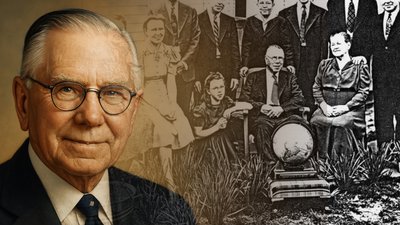
A. J. Tomlinson: Architect of a Theocratic Pentecostal Empire
Here is a clear, tight two-sentence summary of the entire passage: A. J. Tomlinson, a former Quaker turned Pentecostal leader, transformed the Church of God (Cleveland, TN) into a major Pentecostal denomination, but his authoritarian governance and financial controversies led to his 1923 removal and a lasting schism that reshaped the movement. The fallout opened the door for white supremacist influence through figures like Roy E. Davis, while Tomlinson’s son Homer later extended his father’s theocratic ambitions into politics—founding the Theocratic Party, declaring himself “King of the World,” and blending Pentecostalism with British Israelism and dominionist aspirations.
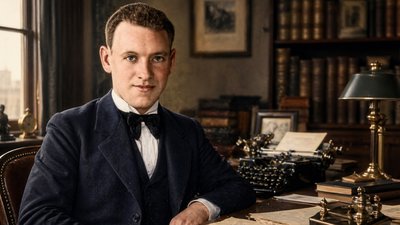
Philip E. J. Monson
Philip E. J. Monson was a British Israelite organizer, founder of Covenant Evangelistic Association, Kingdom Bible College, and Zion Press, and a key West Coast promoter of Anglo-Israelism through Howard Rand's Anglo-Saxon Federation of America, using Bible classes, publishing, and institutional networks to spread racialized prophecy teaching; his 1928 "two-seed" thesis, which linked Cain to Satan and Abel to a supposedly pure bloodline, became an important precursor to later Christian Identity and Serpent's Seed doctrine, influencing figures such as Wesley Swift and forming part of the ideological stream that later overlapped with William Branham's Latter Rain-era Serpent's Seed teaching.
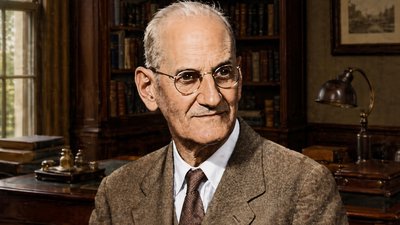
Howard Rand
Howard Benjamin Rand was an attorney, Prohibition Party figure, founder of the Anglo-Saxon Federation of America, and one of the most important American organizers of British Israelism, blending pyramidology, prophecy, racialized identity, anti-Roosevelt politics, antisemitic propaganda, and claims that Anglo-Saxons descended from biblical Israel into a system that helped move British Israel teaching toward Christian Identity; through figures such as William J. Cameron, Gerald Winrod, Gordon Lindsay, and later William Branham's Serpent's Seed theology, Rand's network became part of the ideological background connecting fundamentalist politics, white supremacy, Latter Rain revivalism, and later Pentecostal and charismatic restorationist movements.
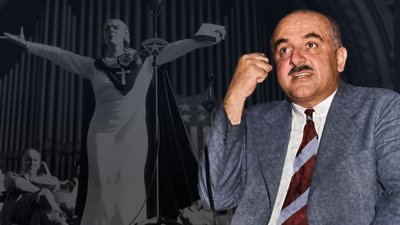
Gerald Burton Winrod
Gerald Burton Winrod was a fundamentalist preacher, publisher, political agitator, and Christian-fascist organizer whose antisemitic, anti-Catholic, British Israelite, anti-Roosevelt, and pro-Nazi propaganda helped shape the ideological world that later fed Christian Identity, Serpent's Seed theology, and parts of the radical revivalist atmosphere surrounding the postwar healing movement; through his Defenders of the Christian Faith, Capitol News and Feature Service, promotion of the Protocols of the Elders of Zion, ties to William J. Cameron, William D. Upshaw, Roy E. Davis, Paul Rader, F. F. Bosworth, Gordon Lindsay, and other fundamentalist and Pentecostal figures, Winrod functioned as a bridge between far-right religious politics, racialized prophecy, anti-communist conspiracy, British Israelism, and the networks that later overlapped with William Branham, Latter Rain, and the Voice of Healing revival world.
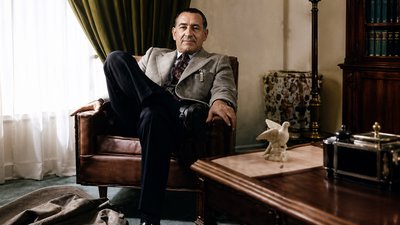
Lee Vayle
Lee Vayle was one of William Branham's closest collaborators, serving as editor, publisher, public interpreter, and doctrinal assistant for the Message movement, with Branham honoring him as "Doctor" and relying on him to help shape, preserve, and promote teachings that later became central to Branham's cult of personality; Vayle's reported explanations of the hidden racial meaning behind Serpent's Seed, including claims that the serpent produced a "colored" or Black race through Eve, show how Branham's public doctrine, private interpretations, and later Message defenses worked together to obscure the white supremacist implications of Branham's theology while continuing to transmit them through trusted leaders and sister churches.
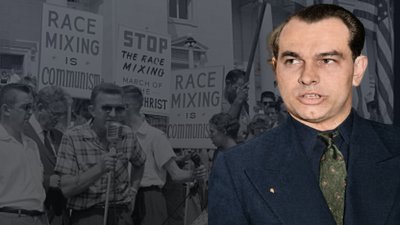
Wesley A. Swift
Wesley A. Swift was a central figure in the development of racist and antisemitic Christian Identity theology, drawing from British Israelism, Philip E. J. Monson's two-seed teaching, Gerald Winrod's far-right religious propaganda, and Anglo-Saxon Federation networks to promote a militant racial theology that identified white Anglo-Saxons as God's chosen people and nonwhite peoples and Jews as spiritually corrupted enemies; through his ties to Angelus Temple, LeRoy Kopp, Gerald L. K. Smith, Klan revival efforts in California, and later extremist groups such as Aryan Nations, Swift became a major bridge between British Israelism, Christian Identity, segregationist politics, white supremacy, and the Serpent's Seed doctrine later popularized by William Branham within Latter Rain and healing revival circles.
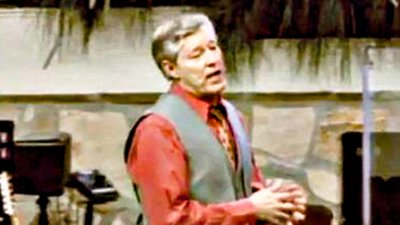
Donny Reagan: A Case Study of Racism in Branham Cult Leadership
Donny Reagan’s viral sermon opposing interracial marriage revealed the continued influence of William Branham’s racial theology within contemporary churches aligned with the Branham movement. Media coverage, church defenses, and Reagan’s own quotations demonstrate that the controversy was not an isolated incident but a modern expression of a long-standing doctrinal system rooted in segregationist beliefs.
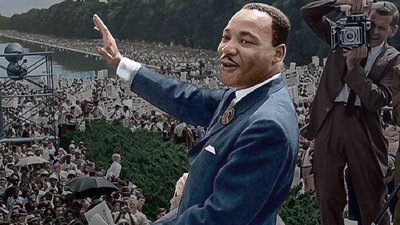
Martin Luther King
Martin Luther King Jr. was an American Christian minister and activist who became the most visible spokesperson and leader in the Civil Rights Movement from 1955 until his assassination in 1968. As the outspoken leader of the movement, King was a public enemy of white supremacy groups such as the Ku Klux Klan. The Klan began spreading propaganda as character assassination, during which time some of the themes made its way into William Branham's sermons.
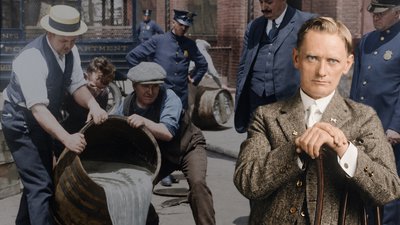
William D. Upshaw
William D. Upshaw was a former congressman, prohibitionist, Southern Baptist evangelist, Klan defender, and later healing-revival promoter whose career connected temperance politics, fundamentalist revivalism, fraternal secrecy, white supremacist networks, and Pentecostal healing culture; from his public defense of the Ku Klux Klan and association with Roy E. Davis to his later claims of healing under Wilbur Ogilvie, William Branham, and O. L. Jaggers, Upshaw became a symbolic bridge between early twentieth-century Protestant political activism, Klan-aligned religion, anti-liquor crusading, revival celebrity, and the staged miracle culture that helped legitimize Branham's postwar healing campaigns.
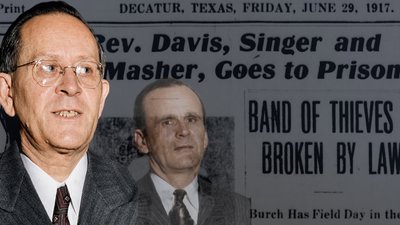
Roy E. Davis
Rev. Roy E. Davis Sr. was a Baptist and Pentecostal preacher, founder of the Pentecostal Baptist Church of God, mentor and ordaining pastor of William Branham, and a lifelong organizer in white supremacist movements, serving under William Joseph Simmons in the reborn Ku Klux Klan, helping form the Knights of the Flaming Sword, and later becoming a nationally recognized leader of the Original Knights of the Ku Klux Klan; his career connected criminal scandal, religious fraud, gospel music, fundamentalist revivalism, Pentecostal sect-building, orphanage fundraising schemes, Klan reorganization, and Branham's early ministry, making Davis one of the clearest links between Branham's origins, Pentecostal restorationism, Christian nationalism, and organized white supremacy.
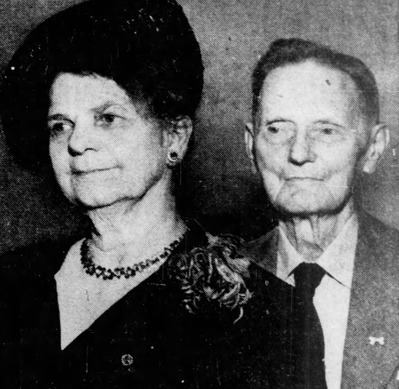
Lily Galloway
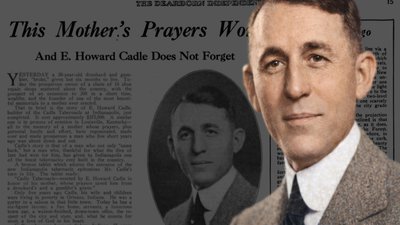
E. Howard Cadle: Revivalist, Power Broker, and the Church That Became Klan Headquarters
E. Howard Cadle rose from gambling and saloon culture to national religious prominence through wealth, revivalism, and the construction of the massive Cadle Tabernacle in Indianapolis. This study traces how that building became a center for political power, Ku Klux Klan activity, and later revival mythology, revealing how religious infrastructure can be repurposed to legitimize ideology, authority, and collective memory.
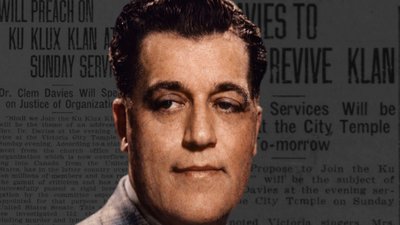
Clem Davies: The White Supremacist Preacher Behind Revivalist Networks
Clem Davies was a transnational revivalist figure whose ministry fused white supremacy, British-Israelism, and apocalyptic prophecy with mass revival techniques decades before the rise of postwar healing movements. His networks, teachings, and organizational methods formed an ideological and structural pipeline that carried racialized theology into later Pentecostal, Latter Rain, and charismatic revival contexts.
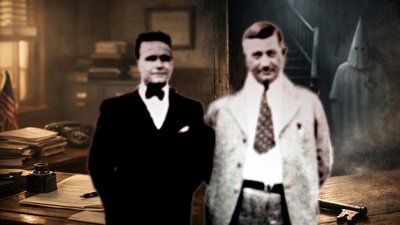
Charles Brumbach: William Branham’s Father-in-Law and the Ku Klux Klan
Charles Brumbach, William Branham’s father-in-law, occupied a position of local political influence while maintaining documented access to Ku Klux Klan infrastructure in Jeffersonville during the 1920s. A comparison of contemporary records with William Branham’s repeated personal accounts demonstrates how elements of the Brumbach household were altered or omitted to sustain a narrative of moral stability and spiritual legitimacy.

Anglo Saxon Christian World: The Vancouver Movement and the Making of Christian Identity
Anglo-Saxonism and its North American expression in the Anglo-Saxon Christian World fused British Israelism, apocalyptic rhetoric, militarism, and white supremacist ideology to construct a theologically sanctioned vision of a divinely chosen Anglo-Saxon race. Through figures such as J. G. Wright, Clem Davies, Gordon Lindsay, and Herbert W. Armstrong, the movement became an influential conduit linking early Christian Identity, the Latter Rain revival, and emerging forms of televangelism.
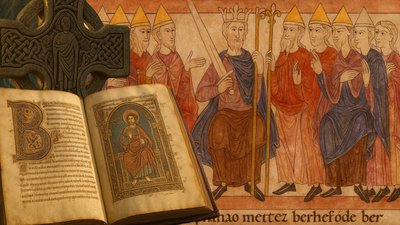
Anglo-Saxonism and Its Influence on Early Pentecostal and Latter Rain Movements
Anglo-Saxonism, rooted in British Israelism and later adapted into American white supremacist theology, influenced key figures who helped shape both the Christian Identity movement and segments of mid-century Pentecostalism. Through leaders such as Wesley Swift, Gordon Lindsay, and George Hawtin, elements of this racialized ideology permeated revival networks, leaving a lasting imprint on parts of the Latter Rain and healing

Pre-Adamite Race
In St. Augustine of Hippo's series of twenty-two books entitled "The City of God," two full chapters are dedicated to condemning an early heresy of the early fifth century: The notion of a race that existed before Adam and the Garden of Eden, which is considered the Genesis of all mankind by Christians. The pagans did not accept the Genesis narrative and claimed that the world had existed for at least a hundred thousand years. St. Augustine titled chapter 40 of book 18, "About the Most Mendacious Vanity of the Egyptians, in Which They Ascribe to Their Science an Antiquity of a Hundred Thousand Years."[1] Since Christians believed the Biblical Genesis of mankind to have happened less than a few thousand years prior, the Egyptians' claim of a hundred thousand-year history would mean that they had existed before Adam as a pre-Adamic Race. Augustine argued that the world was less than six thousand years old.
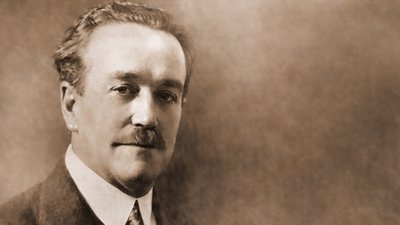
Charles Fox Parham: Fraud, Racism, and the Dark Origins of Pentecostalism
Charles Fox Parham, often credited as a founding figure of Pentecostalism, was deeply entangled with fraud schemes, racial ideology, and extremist theology that shaped both his ministry and his legacy. His promotion of British Israelism, segregation, and apocalyptic communal experiments reveals a movement rooted not only in revivalism but also in white supremacy and exploitation.

People of Color
William Branham's repeated use of racial language such as "colored," alongside terms like "Aunt Jemima" and "darkie," reflected the racial assumptions of the white supremacist world that shaped his ministry, especially through his mentor Roy E. Davis and his continued ties to Klan-connected figures; although Branham claimed to have repented of personal hatred toward Black people, his Serpent's Seed and "hybreeding" doctrines carried forward Christian Identity ideas associated with Wesley Swift, teaching racial impurity, condemning interracial marriage, and allowing later Message figures such as Raymond "Junior" Jackson and Lee Vayle to identify Black people with the serpent's alleged evil bloodline, even as modern defenders attempt to soften or obscure the racial meaning of those teachings.
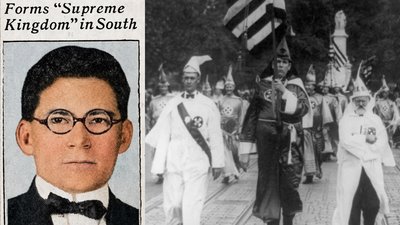
Supreme Kingdom
The Supreme Kingdom was a short-lived white supremacist religious organization founded by former Ku Klux Klan leader Edward Young Clarke after his fall from power, blending fundamentalist anti-evolution activism, anti-atheist politics, school purges, fraternal-style secrecy, and religious nationalism into a new vehicle for Klan-adjacent influence; through figures such as John Roach Straton, Caleb A. Ridley, and Roy E. Davis, it connected Baptist fundamentalism, Klan leadership, anti-modernist crusading, financial exploitation, and white supremacy networks that overlapped with the religious world surrounding Davis and, later, William Branham.
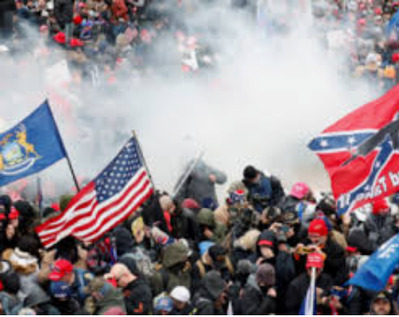
Hate Group
A hate group is defined as an organization or group of individual people having beliefs or practices that attack or malign an entire class of people, often for immutable characteristics, and does so as a result of their own principles. Though criminal activities are often a result of the principles of a hate group, the criminal activities themselves do not define the group. Instead, such activities are the consequences of the group's ideology.
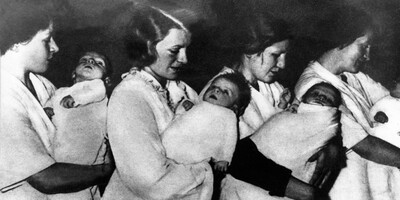
Super Race
Among white supremacy groups, the theme of a "mother race", "master race" or "super race" is the foundation for all ideology. Hate groups built upon this foundation believe that their color of skin or that their attributes distinguishing them from other groups of people make them superior to other specific races, and sometimes all races. In Nazi Germany, this concept known as "The Master Race" (Herrenrasse, "master people") is attributed to Nazi theorist Alfred Rosenberg who believed that the Nordic race was descended from Proto-Aryans, which he believed had prehistorically dwelt on the North German Plain and ultimately originated on the lost continent of Atlantis. Members of this alleged master race were referred to as Herrenmenschen ("master humans").
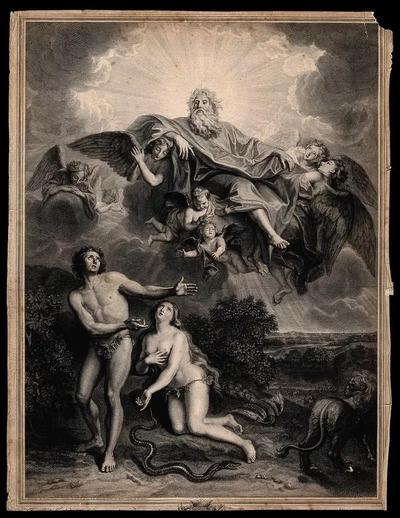
Serpent's Seed
The Serpent's Seed Doctrine was William Branham's rebranding of the Christian Identity Doctrine[1] of Wesley A. Swift, which was popular among white supremacy groups in the 1950s and 1960s. Serpent's Seed (Christian Identity) is the extra-biblical notion that the Original Sin in the Garden of Eden was a sexual union between Eve and the Serpent. According to Swift's theology, Lucifer (Satan) impregnated the Biblical Eve to produce Cain, from which people with black skin descended. This would mean, according to Branham's (and Swift's) doctrine, that people with black skin are the descendants of Satan.
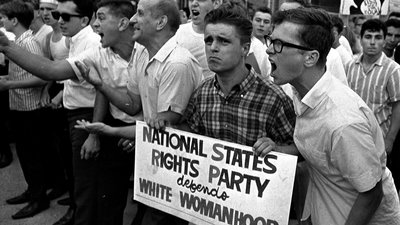
National States' Rights Party
The National States Rights Party was a white supremacist political organization formed in 1958 from a merger of segregationist, antisemitic, Klan-connected, and States' Rights factions, with early roots and national headquarters in Jeffersonville, Indiana, before moving to Birmingham in 1960; its presence in Branham's hometown during the same period William Branham faced federal tax scrutiny places Jeffersonville within a wider network of mid-century far-right organizing, segregationist politics, Christian antisemitism, and white supremacist activism that overlapped geographically and ideologically with the religious world surrounding Branham's Message movement.
No records found.